Merge Adventure: Travel Games
- 4.6
- Rating
- 1.00M
- Installs
- Free
- Price

 Analysis by App-foxy
Merge Adventure: Travel Games is the kind of casual game I open when I want a gentle puzzle session rather than a demanding challenge. Its central idea is easy to understand: combine matching items, clear obstacles, and move through a light adventure built around Elsa. That simple loop makes it approachable, but the game still has enough small decisions to keep a short break from feeling completely automatic.
Moon Active presents it as a merge puzzle adventure, and that description fits my experience. I do not need a long tutorial or previous knowledge of complex puzzle rules to begin. The appeal comes from turning a crowded board into useful objects while gradually making progress through the journey. It is free to start, aimed at Everyone, and available for devices running Android 6.0 or later. The current version is 1.0.38, so I would check compatibility before installing it on an older phone.
Getting started without unnecessary frustration
The first place many players get stuck is not the puzzle itself but the way the board presents its goals. Merge games often look busy because several item types, locked spaces, rewards, and tasks compete for attention. My best advice is to pause before making the first move. Look at the requested objective, identify which items can be combined immediately, and avoid filling every open space with random pieces.
You May Also Like

 Blood Strike: 2.5 Anniversary
Blood Strike’s Loadouts Turn Every Drop Into a Tactical Gamble
A close look at Blood Strike’s custom loadouts: how fast access to signature weapons reshapes its battle royale rhythm, rewards preparation, and narrows the gap between fights.

 Pandora - Music & Podcasts
Pandora’s Music Is Easy to Start, but Harder to Recover
Pandora’s strength is its low-effort path from a seed to a station. Its weak spot is how much confidence it asks you to place in connection, setup, and quiet recovery.

 8 Ball Pool
 Is Built on Rivalries, Rematches, and Routine
A close look at the rivalries, rematches, shared routines, and unanswered safety questions that turn a quick pool match into a persistent mobile community.

 Samsung Music
’s Quiet Strength Is Playing What You Already Own
Its reach comes less from spectacle than from dependable access to a personal library. That simplicity is both the app’s strongest retention engine and its ceiling.

 AccuWeather: Weather Radar
AccuWeather Review: A Quick, Clear Forecast for Everyday Decisions
For everyday plans, the best forecast is the one you can understand quickly. AccuWeather makes rain timing, radar, and local conditions easy to act on, with a few trade-offs.

 Hill Climb Racing
Why Hill Climb Racing Still Turns Crashes Into One More Run
A tiny car, a bumpy hill and one more upgrade: Hill Climb Racing keeps resurfacing because its simple chaos makes every near-miss feel personal.
More From Our News Desk



That habit matters here because a merge is not automatically useful just because it is available. Combining three items may solve a short-term problem, while saving them can create a stronger chain later. I found it more comfortable to treat the board as a small planning exercise: first inspect what is already present, then decide whether the next move should create room, advance the current task, or prepare a higher-level item.
Players who expect a traditional match-three game may need a few minutes to adjust. The focus is less on rapidly spotting colored patterns and more on managing space and timing. That difference is important when choosing this title over a standard match-three alternative. If you prefer quick rounds with a clearly empty board after every turn, the merge format may initially feel slower and more cluttered.
The setup itself is straightforward. I would install it through the normal Android store process, allow the game to finish preparing its files, and open it on a stable connection during the first launch. If the screen appears stuck, the safest first checks are simple: confirm that the device has free storage, close other demanding apps, restart the game, and make sure the phone is not running an unusually old system component.
Those checks are more useful than repeatedly tapping the same button. A game can appear unresponsive while the device is busy, short on space, or trying to complete an update. I also recommend keeping the operating system reasonably current when possible. The stated minimum is Android 6.0, but meeting a minimum requirement does not guarantee identical performance on every phone.
One practical point is that “free” does not mean every optional purchase is free. The game includes in-app purchases ranging from $0.49 to $129.99 per item. I would decide in advance whether purchases are acceptable, especially if a child will use the device. The Everyone age rating makes the game broadly accessible, but household spending controls are still sensible because the purchase range includes both small and very large options.
How I approach the board when progress slows
My most useful workflow is to separate three kinds of moves. First, I look for combinations that create immediate working space. Second, I check whether a merge directly serves the active objective. Third, I consider whether holding an item could support a larger chain. This prevents the common mistake of merging everything as soon as it appears.
When the board becomes crowded, I stop chasing every visible combination. Instead, I choose one target and organize around it. For example, if the task appears to require a particular item family, I keep related pieces near one another and avoid scattering them across the board. This is not a flashy trick, but it reduces accidental taps and makes the next useful merge easier to spot.
A second tip is to use empty space as a resource rather than treating it as decoration. A newly created space can be more valuable than a slightly upgraded item if it lets several related pieces come together. I often make a modest merge simply to open a lane for future moves. That trade-off is easy to miss when the game rewards the feeling of immediate progress.
A third insight is to avoid playing only by the most obvious visual cue. The largest or brightest item is not necessarily the correct next move. I read the current task first, then check which merge will support it. This approach is especially helpful during a short session, because it reduces the chance of spending several minutes improving objects that do not help the immediate objective.
If a move seems to have produced no progress, I first check the task wording rather than assuming the game failed. Merge objectives can be narrower than simply creating a bigger object. The item may need to be used in a particular way, or the board may require several steps before the result becomes visible. Re-reading the goal and scanning the whole board is a better recovery method than restarting immediately.
Recovering a session after a mistake or interruption
Everyone eventually makes an unwanted move. My response is to stop making additional moves until I understand the new board. Trying to “fix” a mistake quickly can create a second problem, especially when space is limited. I review the remaining pieces, identify the next achievable objective, and rebuild the plan from the current position.
If the game closes unexpectedly, I would reopen it once and check whether the latest progress is present before doing anything else. If the session still looks wrong, I would restart the device and verify the connection. I would not immediately clear the app’s storage or uninstall it, because those actions can remove local information or create a new setup problem. Troubleshooting should begin with the least destructive step.
When loading takes longer than usual, the cause may be outside the game. A weak connection, background downloads, low storage, heat, or aggressive battery-saving settings can all affect how an app behaves. Moving to a more reliable network, closing unused apps, allowing the phone to cool, or freeing storage are sensible general checks. I would also avoid repeatedly switching between the game and other heavy apps while diagnosing the issue.
There is another kind of recovery that has nothing to do with technical errors: recovering from poor board management. If I have filled the available area with unrelated pieces, I stop generating more clutter and focus on the smallest useful combinations. The goal is to restore maneuvering room. This is where patience helps more than speed; a chain of modest improvements can be better than waiting for one perfect merge.
For a child or a casual player, I would explain the game in terms of “look, plan, then merge.” That simple routine is more helpful than giving instructions about maximizing every possible chain. It also makes the game less frustrating when the board becomes busy. The title is accessible, but accessibility does not remove the need for a little organization.
What makes this different from familiar casual puzzles
Compared with a typical match-three game, this adventure feels more like a small inventory puzzle. The board itself becomes part of the challenge, and the order of actions matters. That gives the game a calmer rhythm, but it also means that players looking for constant speed may find it less immediately exciting.
Compared with a purely decorative story game, the merge decisions have more weight. I am not simply tapping through dialogue or watching a sequence unfold; I have to decide which pieces deserve attention and when to spend them. The travel framing gives those decisions context, while Elsa provides a recognizable focus for the journey.
Its strongest use case is a short, low-pressure break. I can imagine playing while waiting for an appointment, during a commute with a reliable connection, or at home when I want something lighter than a competitive game. The merge format also suits people who enjoy tidying, organizing, and gradually improving a collection of objects.
It is less suitable for someone who dislikes energy-like pacing, repeated task structures, or purchase prompts in free-to-play games. Even without buying anything, the presence of optional items can affect how the experience feels. Players who want a single upfront purchase and no in-game spending decisions may be happier with a premium puzzle instead.
The public response suggests that the game has found a sizeable audience: it has an average rating of 4.6 from around 150 thousand ratings, with over 1 million installs and roughly 4.8 thousand written reviews. I treat those figures as encouraging rather than decisive. A popular casual game can still be a poor match for someone who wants fast action, deep strategy, or complete freedom from optional purchases.
Small habits that make everyday play smoother
I recommend starting each session by checking the current objective instead of continuing automatically from the previous move. This takes only a moment and prevents wasted combinations. If I know I will play briefly, I choose a manageable target rather than trying to reorganize the entire board.
I also keep the phone’s notification panel and other interruptions under control when possible. An accidental touch while the board is crowded can change the plan, and a short game session is easier to enjoy when I am not constantly leaving and returning. This is a general habit, but it matters more in a merge game because one careless action can affect several later moves.
For younger players, I would combine the game with purchase restrictions at the device level and explain that progress does not require tapping every offer. The game’s Everyone rating makes it approachable, but the listed purchase range means supervision is still worthwhile. That is a practical distinction between suitability for children and suitability for unsupervised spending.
If performance becomes inconsistent after extended play, I would close other apps, restart the game, and check the device temperature. I would avoid promising that one fix will solve every problem, because phones differ widely. If only this game is affected, reinstalling can be considered after protecting any progress that matters; if several apps are affected, the phone itself is the more likely place to investigate.
Another useful boundary is knowing when to stop forcing a session. If I am repeatedly making moves without understanding the objective, I close the game and return later. Merge puzzles are more enjoyable when I can see the board clearly. A short break often works better than turning a relaxing title into a frustrating chore.
My practical verdict for different players
After spending time with it, I see Merge Adventure: Travel Games as a friendly choice for players who enjoy gradual progress, light planning, and a travel-themed casual setting. Moon Active keeps the basic interaction approachable, while the board organization gives it more substance than a game based only on rapid tapping.
The main friction comes from managing space, interpreting objectives, and accepting that the free-to-play structure may include optional purchases. Those are not minor details for every player. Someone who wants instant rounds, a purely offline-feeling experience, or a fixed-price game should look elsewhere. A conventional match-three title is a better option for quick pattern matching, while a premium puzzle is better for players who want fewer monetization decisions.
For everyone else, I would recommend trying it with a clear approach: check the objective, preserve useful space, merge with a purpose, and troubleshoot calmly if loading or progress seems unusual. The game is free to download, rated Everyone, and its broad device support makes it easy to test on compatible Android phones. Just remember that the free entry point and the optional purchase range are two parts of the same experience.
My final recommendation is positive, with conditions. If you like organizing pieces and watching a small adventure develop at your own pace, this is an enjoyable casual companion. If you need fast competition or dislike free-to-play friction, it will probably not change your mind. I would install it for relaxed sessions, keep spending controls in place, and judge it by whether its thoughtful board management feels satisfying rather than by how quickly I can complete each task.
FAQs for Merge Adventure: Travel Games
01What is Merge Adventure: Travel Games about?
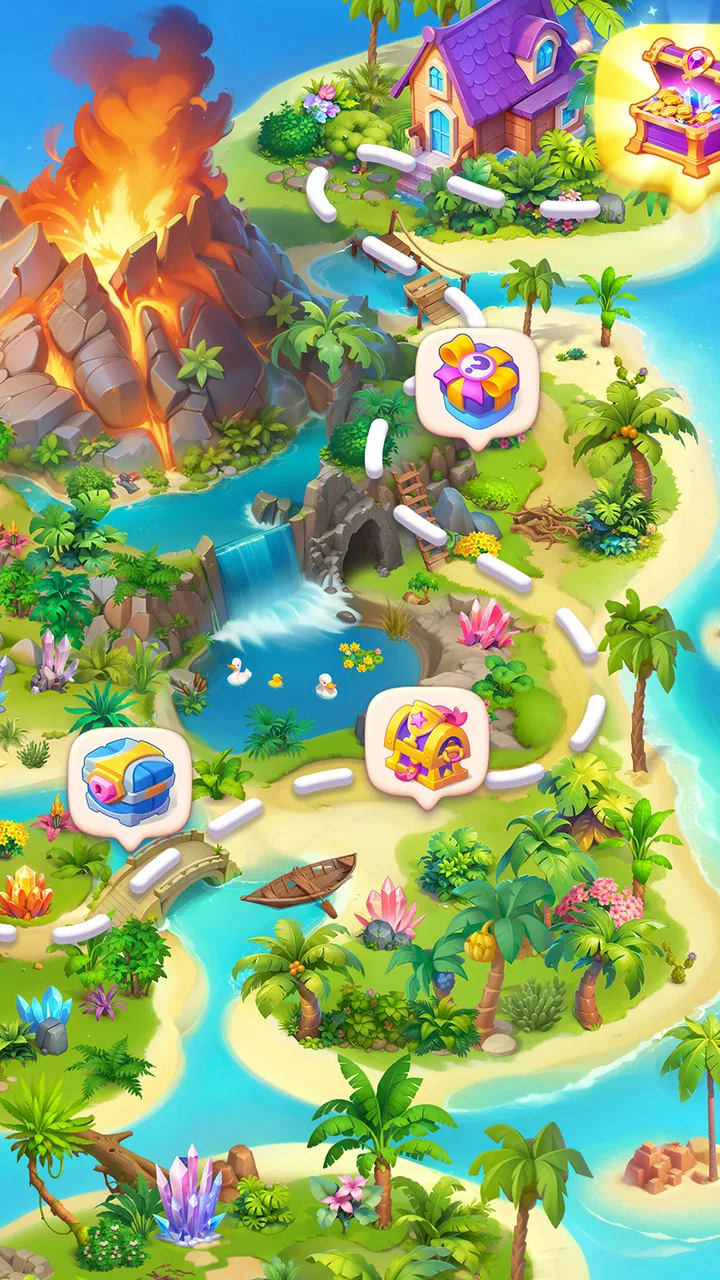
Merge Adventure: Travel Games is a casual puzzle and exploration game built around combining matching objects to create upgraded items. As you progress, you help characters complete tasks, restore locations, and travel through different destinations. The game mixes merge mechanics with light storytelling, collection goals, and decorative progression, making it suitable for players who enjoy relaxed, goal-based mobile games.
02Is Merge Adventure: Travel Games free to download and play?
The game can generally be downloaded and played for free, but it may include optional in-app purchases. These purchases can provide extra energy, boosters, currency, or other progress-related items. You can usually enjoy the main gameplay without paying, although waiting for energy to refill or progressing more slowly may be part of the free experience. Check the store listing for current pricing details.
03Does Merge Adventure: Travel Games require an internet connection?
An internet connection may be needed for certain features, such as loading events, synchronizing progress, displaying advertisements, processing purchases, or receiving new content. Some basic gameplay may work temporarily offline, but this can vary by device and game version. For the most reliable experience, especially when traveling between locations, it is best to launch and play the game while connected to the internet.
04Is Merge Adventure: Travel Games suitable for children?
The game uses colorful visuals, simple touch controls, and casual merge puzzles that can be approachable for younger players. However, parents should review the age rating and privacy information before installation. Because the game may contain advertisements, optional purchases, and online features, parental controls are recommended if children use the app. The difficulty and reading requirements may also vary throughout the adventure.
05What should I know about energy, ads, and in-app purchases?
Progress in Merge Adventure: Travel Games may be influenced by an energy system that limits how many actions you can perform before waiting for recovery. Advertisements or optional purchases may offer additional rewards, energy, or convenience. These features are common in free-to-play merge games, so players who prefer uninterrupted progress should review the available settings and purchase controls before starting.
Pros
- Relaxing merge mechanics are easy to learn and suitable for casual play.
- Frequent tasks and events provide clear short-term goals.
- Travel-themed locations make progression feel varied and rewarding.
- Offline play is useful when traveling or away from a stable connection.
- Colorful visuals and friendly characters appeal to a broad audience.
Cons
- Energy limits can interrupt longer play sessions.
- Progress may feel slow without spending premium currency.
- Some rewards and features are tied to optional in-app purchases.
- Repeated merging tasks can become predictable over time.
- Ads may appear when claiming certain bonuses or extra resources.

Merge Adventure: Travel Games
Gallery